Kanban for Teams: How to Run One Board, One Owner, Zero Status Meetings
By Sambhav Aggarwal · Founder & Project Strategist at Otper. Expert in lean operational workflows and team accountability.
TL;DR
One shared board, a single owner on every card, a WIP limit on every column. The numbers a manager asks for are already on it, so the status meeting gets deleted.
Work sits in a chat thread, two spreadsheets and somebody's head, and its status lives in a Wednesday meeting. McKinsey found interaction workers spend 28% of the work week managing email and 19% searching for information — operational drag, before anyone ships anything. Kanban for teams is the fix.
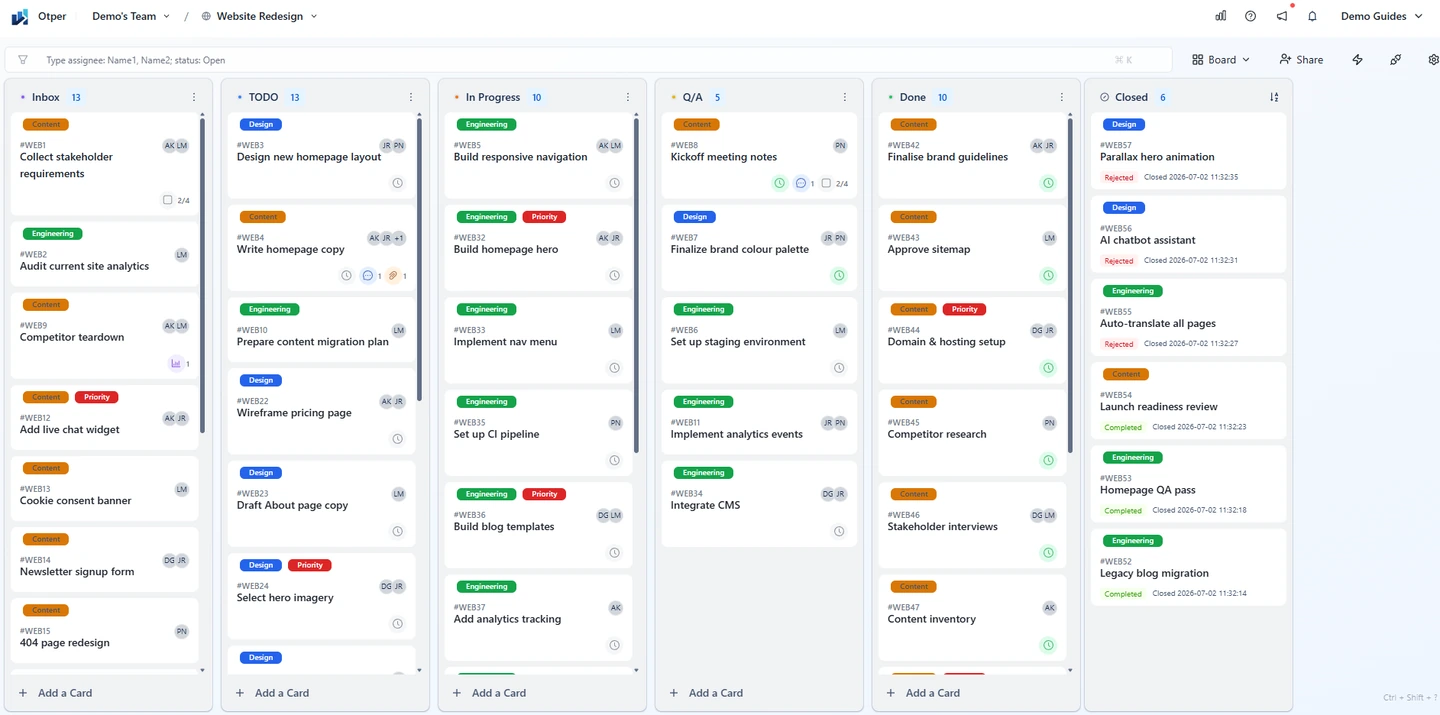
Kanban for teams, not for individuals
What changes when kanban boards are shared is not the columns — it is who the board answers to. A teams kanban board is an agreement about how work moves between people.
- One board, one source of truth: every piece of work sits in one place. That is what makes kanban for project management work at team scale.
- Work is pulled, not pushed: people take the next card when they have capacity.
- The board replaces the status update: if a card moved, the update happened.
These are kanban boards for a team, not a board inside a chat app.
Why task lists fail teams
A task list fails where a kanban board for project management earns its keep: when work moves between people. A list shows what exists. It hides what is in flight, who owns it, and which stage has stopped draining. Status is assembled by hand.
The 5 rules of a shared board
- One card, one outcome: not one project, not one person's day.
- One card, one named owner: helpers may be assignees, co-owners may not.
- Every column has a WIP limit: including Review, where unfinished work collects.
- Blocked cards get flagged, not buried: a label on the card face, never a comment twelve deep.
- The board is updated before the review, never during it.
Rules one, two and five are conventions, not settings. The board makes breaking them visible.
How to set up kanban for teams in 20 minutes
- Define your columns: Backlog · Ready · In Progress · Review · Done. Ready is the column teams skip, and the one that makes pull work.
- Set a WIP limit on every column — soft warns, hard refuses.
- Assign one owner per card — assignable people are board members, so add the team first.
- Add a Blocked label, then automate it in a waiting stage.
- Set the board cadence for updates and reviews. Dated work also draws itself on the Gantt view.
- Turn on delivery reporting — open Reports and scope it to your boards. Team and board admins can read it.
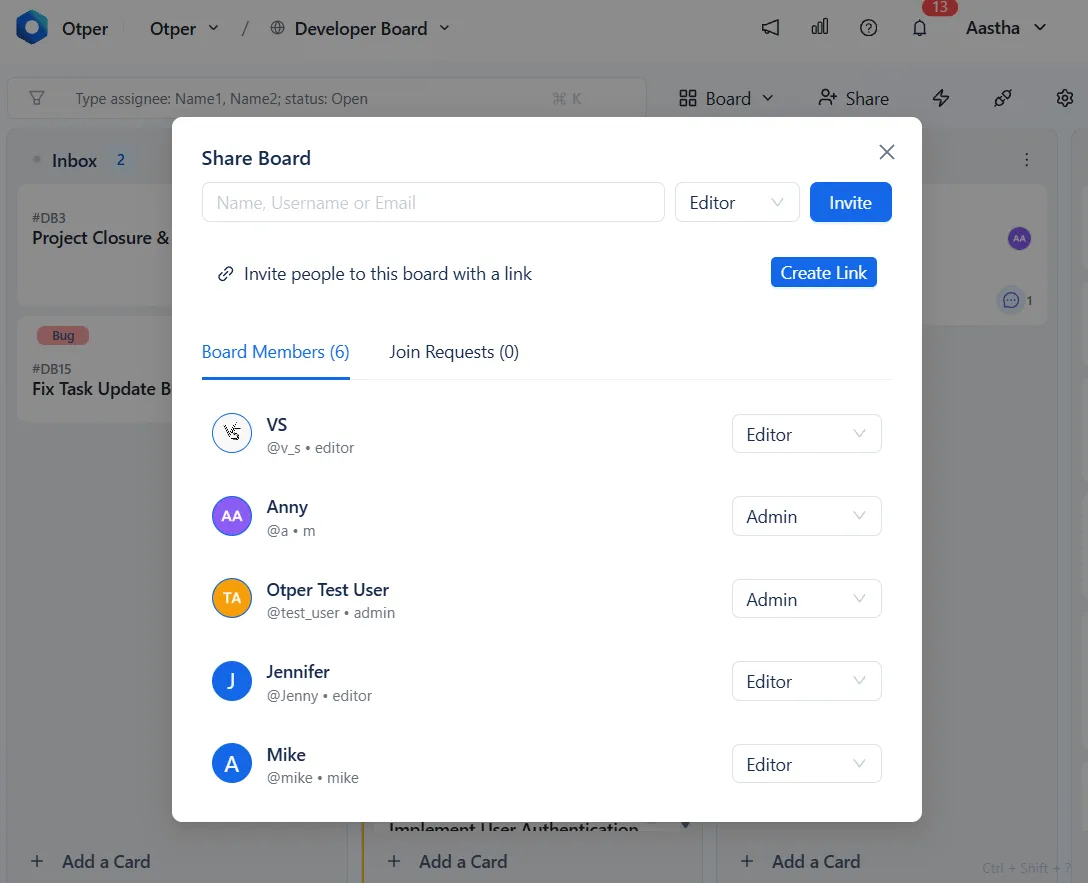
WIP limits your team will actually keep
Otper's recommended starting point, not an industry law:
- Per person: 2 cards in progress, never 3.
- Per column: active members × 1.5, rounded down.
- Review column: half the In Progress limit.
| Active members | In Progress limit | Review limit |
|---|---|---|
| 3 | 4 | 2 |
| 5 | 7 | 3 |
| 8 | 12 | 6 |
A limit that does nothing is decoration. Past the soft limit the column turns amber — a warning, nothing blocked. At the hard limit it turns red and refuses the card until something leaves. Set soft at capacity, hard one above. The stage that stays amber is your bottleneck detection.
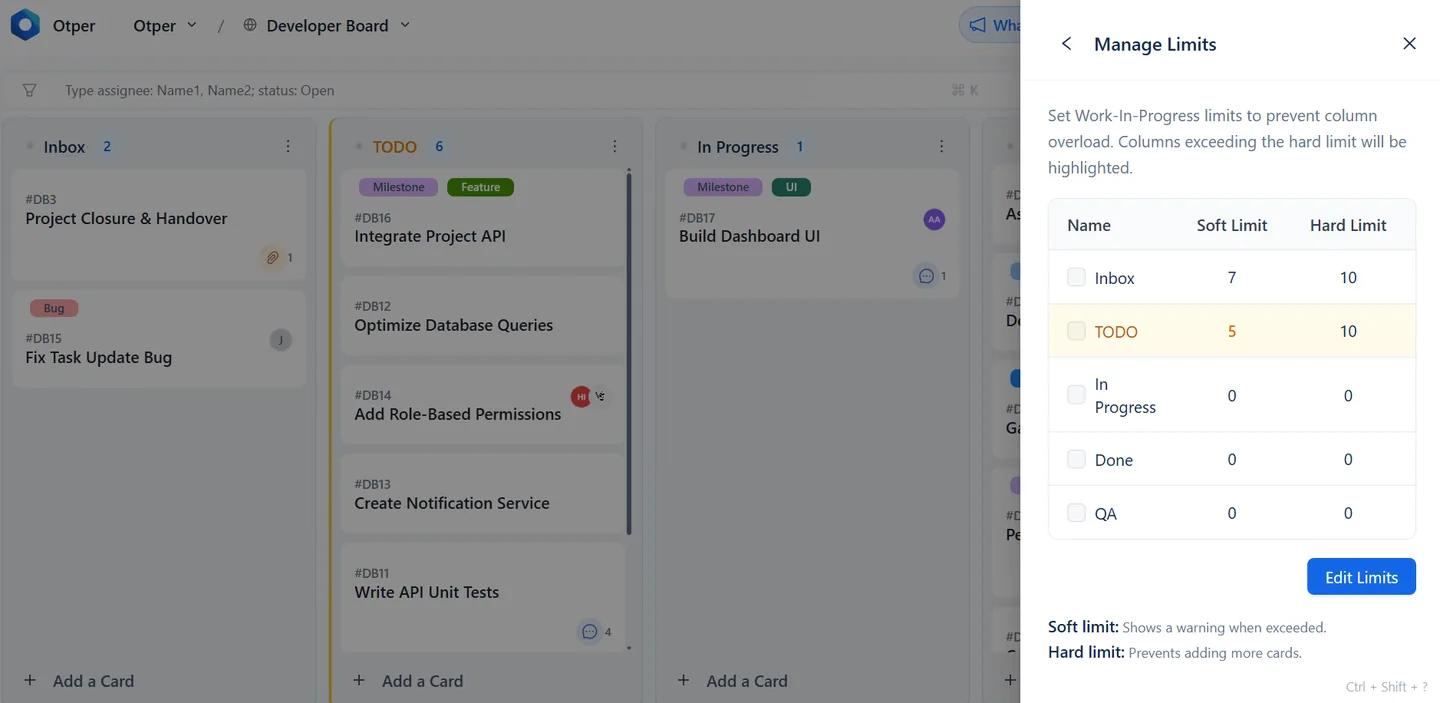
Ownership: the rule that ends "I thought you had it"
Every card gets one named owner, accountable for moving it, not for doing all the work. Helpers join as assignees. What you remove is the card with two equal names.
When a card ages, escalate in order. Owner first: what is it waiting on? Then the board: one card, or a column-wide queue? Then the manager, deciding a pattern, not refereeing a handoff.
This is where team accountability stops depending on memory: a card keeps a contributor history of who owned it and when they handed it on.
Replacing the status meeting with a board review
Fifteen minutes, twice a week, async. One person reads the board and answers three questions:
- What is blocked? Filter the Blocked label. Each one needs a name and a next action.
- What is over its WIP limit? Any amber or red column. Nothing new enters until it drains.
- What is ageing? No card activity for seven days, flagged as stuck.
If the board answers those three, the meeting is deleted, not shortened. Keep one for decisions that need argument.
The 4 metrics a team board must show
- Throughput: cards created vs completed per period. Act when created outruns completed two periods running.
- Median completion days: how long cards take end to end. Act when the median climbs while throughput stays flat.
- Stage bottleneck: average days per list, ranked and scored. Act when a stage scores critical.
- Stuck cards: no activity for seven days or more. Act when the count is above zero.
All four come from activity your team already produces — delivery reporting with nothing to maintain: pick a range, scope it, export to CSV or PDF. Together they are how you spot a slipping project before the deadline.
Kanban board software for teams: what to check before you buy
| Tool | Free tier | Paid from | Native WIP limits | Ownership | Reporting |
|---|---|---|---|---|---|
| Otper | $0 — 3 teammates | $12/user/mo | Soft + hard, per list | Assignees + contributor history | Built in |
| Trello | 10 boards/workspace | $5/user/mo | Via add-on | Members | Via add-on |
| Jira | Up to 10 users | ~$8/user/mo | Native | Single assignee | Built in |
| ClickUp | Free plan | $7/user/mo | Native | Assignees | Dashboard build |
| Asana | Up to 10 users | $10.99/user/mo | Not native | Single assignee | Higher tiers |
| monday.com | Up to 2 seats | $9/seat/mo | Not native | People column | Higher tiers |
Pricing checked September 2026; monday.com has a 3-seat paid minimum.
Five criteria worth more than a feature count in any kanban board program:
- Does a WIP limit stop the card? A number on a column header changes nothing.
- Is ownership readable from the board? Opening a card to find the owner means the board is not reporting.
- Does reporting exist before you configure it? A kanban project management tool that needs a dashboard built first will not get one.
- Is the free tier big enough for a pilot? Free kanban software only helps if a whole small team fits.
- How long to the first useful number? Measure setup to first report, not first card.
FAQ
How do you use Kanban for teams?
One shared board, one owner per card, a cap on every column. People pull the next card when they have capacity, so status needs no reporting.
How many WIP limits should a team have?
One on every column, not just In Progress. Start with two cards in progress per person, a per-column cap of active members × 1.5 rounded down, and Review at half the In Progress limit.
Can a Kanban board replace status meetings?
Yes, if it answers what is blocked, what is over limit and what is ageing. When nobody has to assemble those, the meeting is deleted.
How do you assign ownership on a Kanban board?
Assign one member as the accountable owner on the card, so responsibility is readable from the board rather than remembered.
What is the difference between Kanban for teams and a task list?
A list shows what exists. A board shows where each item is, who has it, and caps what is in flight.
Keep reading
Try this workflow free in Otper
One board, one owner per card, WIP limits on every column. Free for up to 3 teammates.
Get started free