How to know a project is slipping before the deadline
A missed due date is not the moment a project goes wrong. It is the moment everyone finds out. By then the decisions that would have helped - rebalance the load, escalate the handoff, cut scope - are weeks behind you. Catching slippage early means watching the signals that move before the deadline does.
These signals are one slice of a larger toolkit - see the complete guide to Kanban metrics and reporting for bottlenecks, workload, throughput, and the rest.
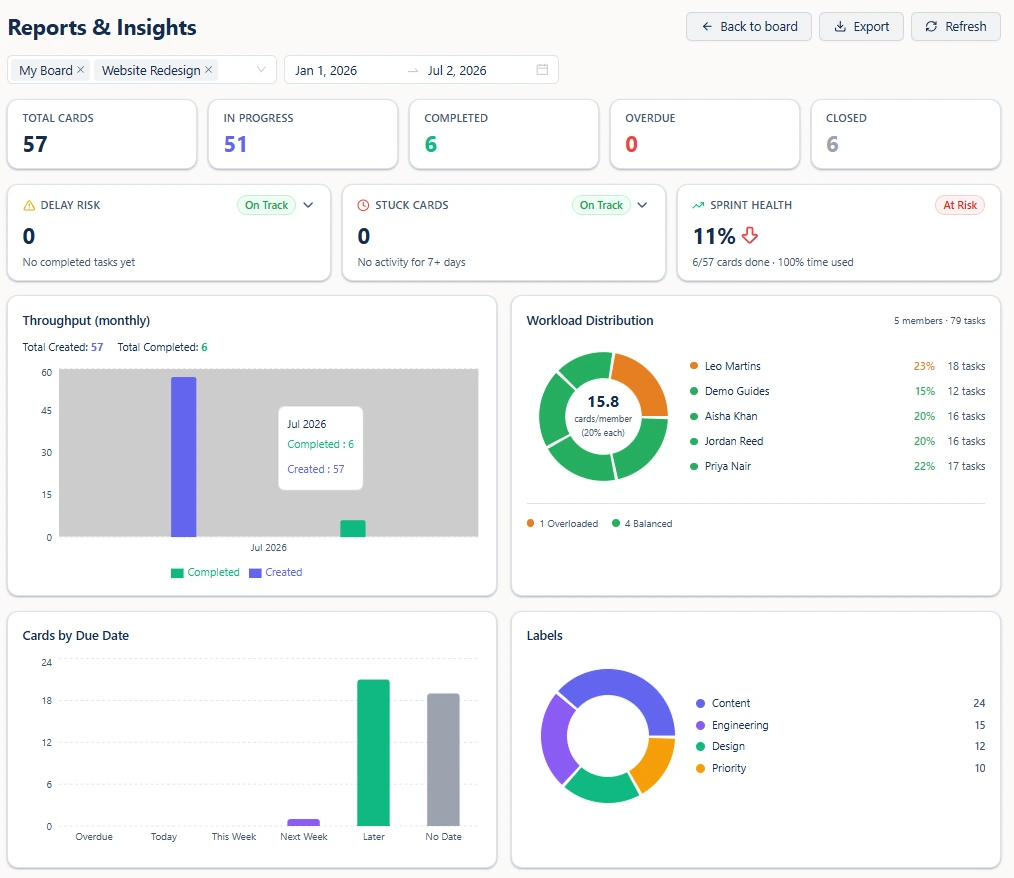
1. Compare what is done against how much time is gone
The earliest warning is a ratio, not a date. If the whole period has elapsed and only a fraction of the work is finished, the deadline is already lost - the calendar just has not caught up yet. Otper reports this as Sprint Health: completion rate against time elapsed, flagged at risk whenever completion falls behind the clock. It is a blunt signal, and that is the point: it fires while there is still room to act.
2. Watch work that is running long, not work that is late
Overdue is a lagging measure of a decision already made. Delay risk is a leading one. Otper takes the median time your closed cards actually took to finish, then flags every open card that has been open longer than that median, or that has less time left before its due date than the median. The comparison is against your team's real pace, not an estimate someone made at kickoff.
3. Treat silence as a symptom
A card with no activity for seven days or more is flagged as stuck. Stuck is rarely about effort. It is usually a handoff nobody escalated, a review waiting on someone who is away, or a client answer sitting in an inbox. Late work announces itself in a standup; stuck work does not, which makes it the signal most worth checking at the start of each week.
4. Name the slow stage instead of guessing
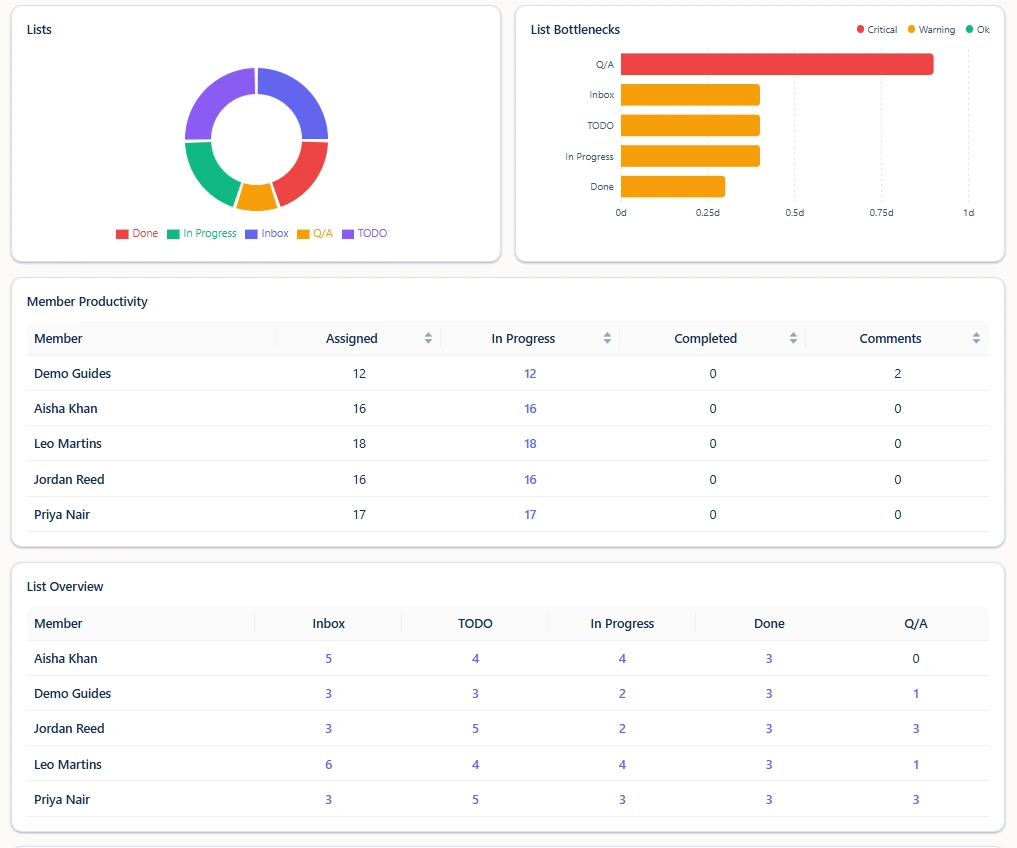
When delivery drags, the instinct is to look at people. The better question is which stage work piles up in. Otper measures the average days cards spend in each list, scores every stage against the slowest one, and ranks them critical, warning or ok. If review is consistently the critical stage, pushing the team upstream will not help - the constraint is downstream of them.
Make each signal owe you an action
Signals only matter if they change something. A workable default:
- Sprint Health at risk - decide now whether to cut scope or move the date, while both are still real options.
- Delay risk climbing - check whether the at-risk cards share an owner or a stage. The pattern tells you which lever to pull.
- Stuck cards - escalate the handoff rather than reassigning the card. Reassigning hides the blockage.
- One critical bottleneck - move capacity to that stage, not to the project as a whole.
None of this needs a separate tracking habit. Every number above derives from board activity your team already produces: pick a date range, scope it to the boards in play, and the signals are the current state of the work.
FAQ
What is the earliest sign a project is slipping?
Completion rate falling behind time elapsed. If most of the period is gone and only a fraction of the work is finished, the deadline is already at risk even though nothing is formally overdue yet.
How is delay risk different from overdue?
Overdue means a due date has already passed. Delay risk looks at open work: cards open longer than the median time your team actually takes to finish cards, or with less time left than that median.
Why do stuck cards matter more than late cards?
A late card is already visible and usually already being discussed. A stuck card has had no activity for seven days or more and is often a handoff or review nobody escalated, so it stays invisible until it becomes a missed date.
Does Otper predict my delivery date?
No. There is no deadline forecast or burndown projection. It reports what is happening now against your own historical pace, and flags the work that is drifting, which is what you can still act on.
Keep reading
- Finding bottlenecks, overdue work and workload issues
- A weekly project-status report template
- Setting up a board that reports well
See where your projects actually stand
Otper derives delay risk, stuck work and stage bottlenecks from the board activity you already have.
Get started free