How agencies can reduce status-meeting time
A weekly status meeting with 8 people in it costs 8 hours of billable capacity, every week. Most of that time is not spent deciding anything. It is spent establishing facts that a report already holds. The way to shorten the meeting is not to talk faster - it is to stop using the meeting as a data-collection method.
Separate the gathering from the deciding
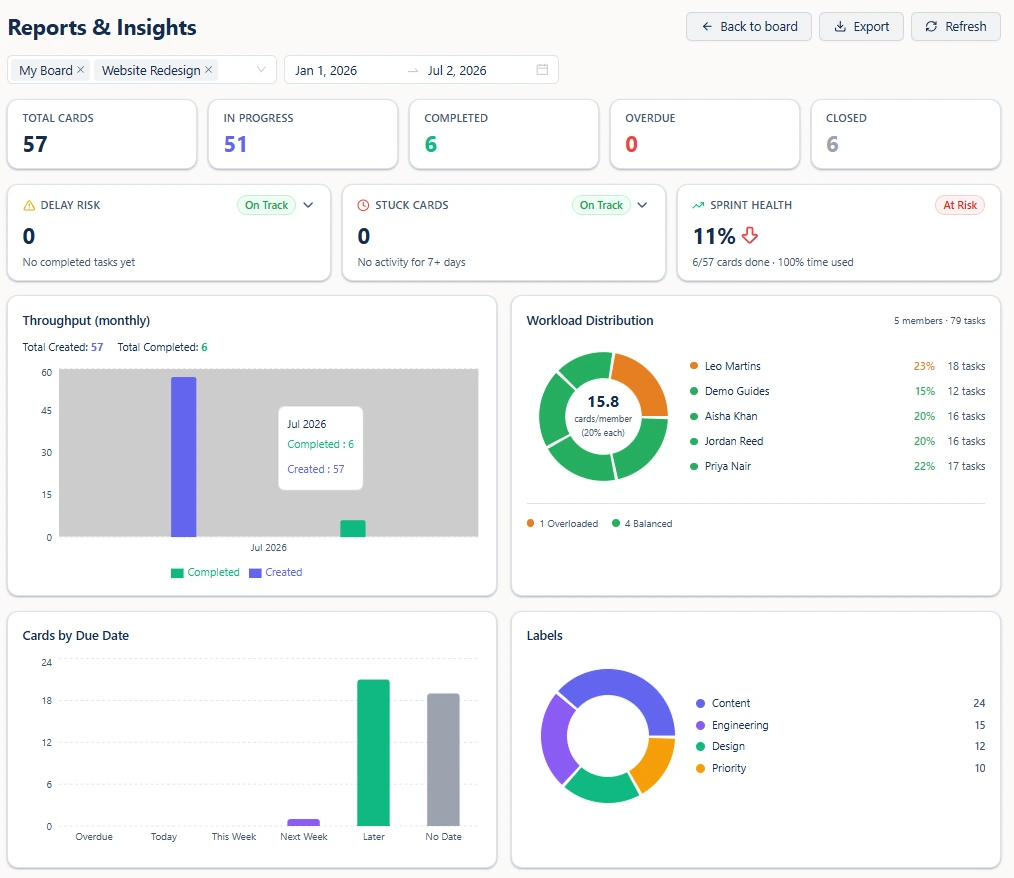
Almost every status meeting exists to answer four questions, and not one of them needs a room. All four are already computed from board activity:
- What moved - completed counts and throughput for the period.
- What is late - the overdue list, with who is on each card and days elapsed.
- What is blocked - cards with no activity for seven days or more.
- Who is overloaded - each person's share of active work against the team average.
Send that before the meeting and the agenda changes shape. Instead of thirty minutes of reporting followed by five rushed minutes of decisions, you get a short conversation about the two or three things that genuinely need several people to agree.
Let automations do the chasing
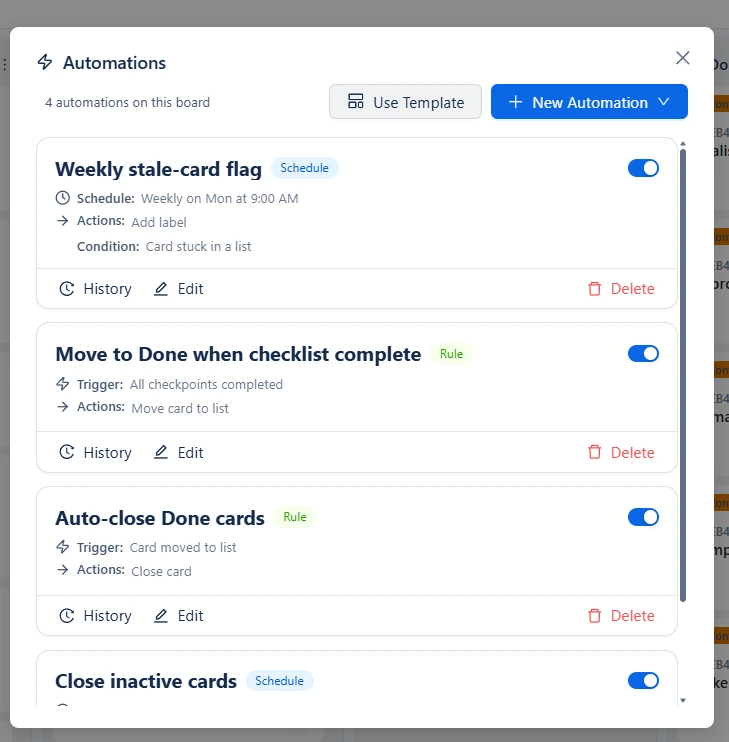
A large share of meeting time is follow-up that someone forgot to do earlier in the week. Scheduled automations absorb that work. Otper ships templates for exactly these habits:
- Weekly stale-card flag - every Monday morning, label cards that have not moved for seven days.
- Daily overdue comment - each morning, comment on every card past its due date.
- Due date reminder - post a comment one day before a card is due, so the reminder lands while there is still time.
The point is not that a comment replaces a conversation. It is that the card raises its own hand, so the meeting is not the mechanism that catches drift.
Move the running commentary into the channel
For teams already living in Slack, board and card events can post into linked channels, and messages in those channels can become cards on the board. Progress becomes ambient rather than something recited at a fixed time, and requests stop evaporating into chat history.
What the shorter meeting is for
Keep the meeting, shrink its job. It should exist for trade-offs, escalations and scope changes - the decisions where one person cannot commit for everyone else. Everything upstream of that is reading, and reading does not need a calendar invite. If your agenda still opens with a round of updates, the report is not being sent early enough.
FAQ
Why do status meetings run long?
Because most of the time is spent gathering information rather than deciding anything. Going around the room to establish what moved and what is late is data collection, and data collection does not need everyone present.
What should stay in the meeting?
Decisions that need several people in the room: trade-offs, escalations, scope changes, and anything where one person cannot commit on behalf of the others.
How do automations reduce meeting time?
They handle the chasing that otherwise becomes agenda items. A weekly rule can label cards that have not moved in seven days, and a daily rule can comment on every overdue card, so the follow-up happens without a person doing it.
Will removing the meeting reduce visibility?
Only if nothing replaces it. Replace it with a report everyone can read on their own and automations that surface stale and overdue work, and visibility usually goes up, because it no longer depends on who remembered to mention something.
Keep reading
- A weekly project-status report template
- Workflow automation examples that keep work moving
- Turning Slack conversation into tracked work
Give the meeting less to do
Let Otper report what moved and flag what stalled, so the meeting is only for decisions.
Get started free